To report an adverse event or product quality complaint, call 1-877-TAKEDA-7 (1-877-825-3327)

To report an adverse event or product quality complaint, call 1-877-TAKEDA-7 (1-877-825-3327)

To report an adverse event or product quality complaint, call 1-877-TAKEDA-7 (1-877-825-3327)
To report an adverse event or product quality complaint, call 1-877-TAKEDA-7 (1-877-825-3327)
Psoriasis, a chronic and systemic inflammatory disease that largely affects skin and joints, is estimated to affect around 3% of US adults.1‑3 Psoriasis lesions are commonly the first manifestation of psoriatic disease, which includes both plaque psoriasis and psoriatic arthritis.1,2,4‑6 Lesions are thick, erythematous, scaly, itchy, disfiguring, and disabling.1 Plaque psoriasis is the most common type of psoriasis, which can occur anywhere on the body, commonly affecting the scalp, trunk, intergluteal fold, elbows, and knees.1,2 Plaque psoriasis can also involve high-impact areas such as intertriginous areas, scalp, genitals, palms, soles, face, and nails.1,2,7,8
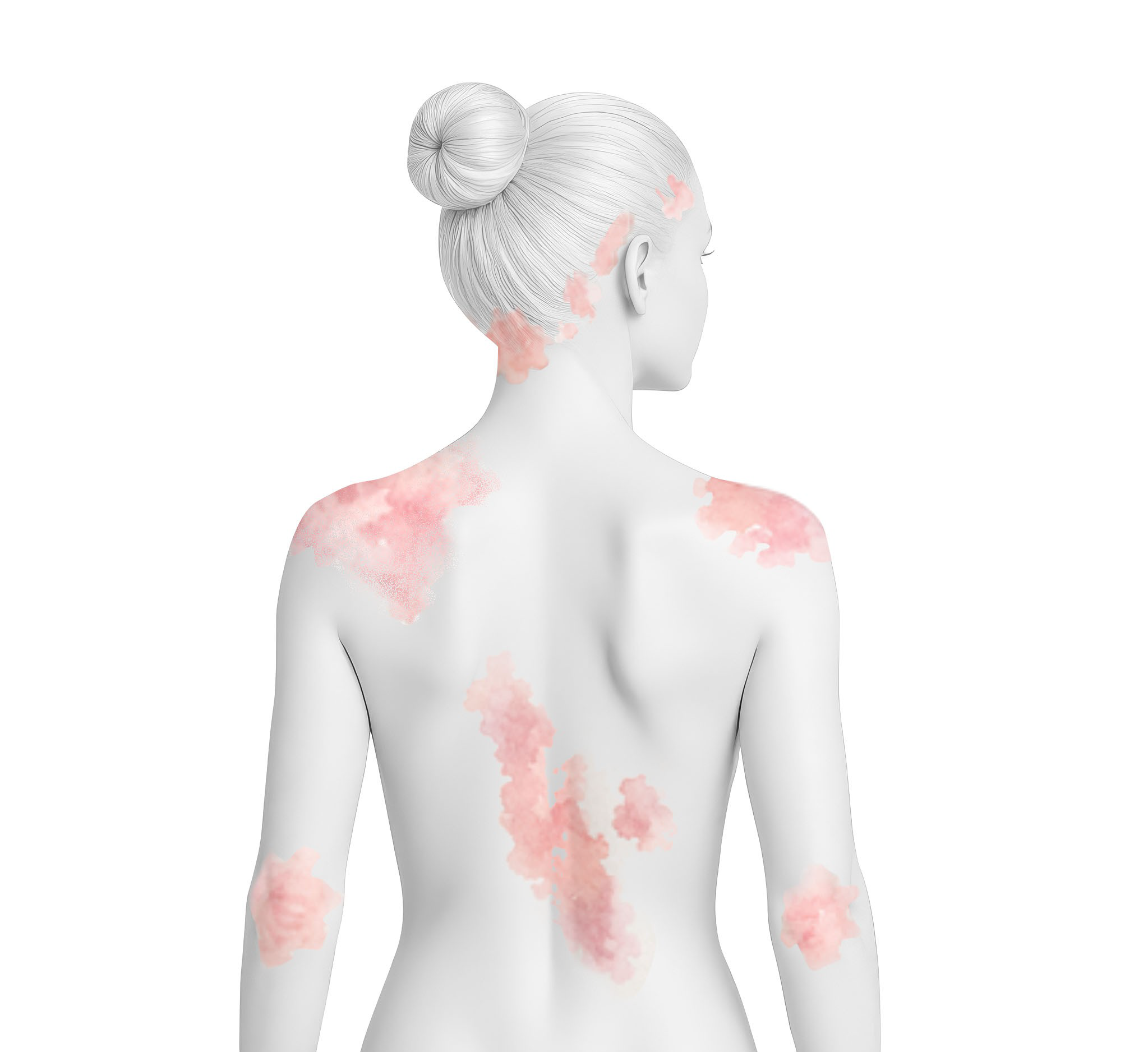

Psoriasis is estimated to affect around 3% or approximately 7.5 million US adults.10,12 Psoriasis occurs equally in men and women with a higher prevalence in adults than in children, and often exhibits a bimodal age of onset.1,11
Plaque psoriasis is estimated to affect approximately 2% or about 5 million US adults.9,10 It is more common in non-Hispanic White individuals, individuals with a higher body mass index (BMI), and individuals over 50 years of age.11 The prevalence of plaque psoriasis is projected to increase, due to environmental and lifestyle factors, including obesity and alcohol consumption, a change in composition of disease characteristics based on age and sex, and a growing awareness of the disease, driving earlier diagnosis and treatment.2,11,12‑14

The pathogenesis of plaque psoriasis is a complex interaction of genetics, environmental triggers, and immunological factors contributing to amplification of inflammation.1 More than 80 genomic risk loci have been identified that explain ~30% of disease heritability.2 Extrinsic risk factors of psoriasis include mechanical stress, air pollution, green space environments, prescription drugs, vaccination, infection, smoking, and alcohol consumption.2,13,14 Intrinsic risk factors include metabolic syndrome, obesity, diabetes mellitus, dyslipidemia, hypertension, and mental stress.14
Pathogenic activation of immune cells, either resident or recruited to the skin, leads to dysregulated production of proinflammatory cytokines; signaling of these cytokines relies heavily on tyrosine kinase 2 (TYK2), an intracellular tyrosine kinase enzyme.1,2,15 External stimuli can activate keratinocytes, thereby triggering the release of proinflammatory mediators and activating myeloid dendritic cells, which produce cytokines such as interleukin-23 (IL-23), type I interferon (IFN), and IL-12.2,16,17 These cytokines induce TYK2-mediated activation, differentiation, and expansion of pathogenic lymphoid cells, including Th1 and Th17 cells.2,16,17 Proinflammatory mediators produced by Th1 and Th17 cells lead to a feed-forward amplification of keratinocyte hyperproliferation, ultimately driving the development and perpetuation of the inflammatory cascade in psoriasis.15,16,18
TYK2 is an intracellular, non-receptor tyrosine kinase that signals through the Janus kinase (JAK)-signal transducer and activator of transcription (STAT) pathway.15 It plays a key role in the development and persistence of psoriasis by mediating the signaling of IL-23, type I IFN, and IL-12, which drive the clinical manifestations of the disease.15‑19 The genetic variant P1104A causes a partial loss of function of TYK2 and has been shown to reduce TYK2-dependent signaling with no observed detrimental effects, thereby conferring protection against psoriasis and some other systemic inflammatory diseases.20,21

Timely and accurate diagnosis of plaque psoriasis is essential to the initiation and selection of appropriate treatment and can be difficult due to differential skin diagnoses, socioeconomic disparities, and the variable appearance of lesions in different skin phototypes.3,22,23
The diagnostic workup for plaque psoriasis includes a family history of psoriatic disease and a comprehensive skin and nail examination evaluating the morphology and distribution of psoriatic lesions by inspecting nails, scalp, flexures, and the intergluteal cleft; biopsy may confirm the initial diagnosis.1,2 Many differential diagnoses exist for psoriasis and include inflammatory (e.g., pityriasis rosea), infectious (e.g., secondary syphilis), and neoplastic conditions (e.g., cutaneous T-cell lymphoma) that mimic the papulosquamous presentation of psoriasis.1,2
Clinical diagnosis of plaque psoriasis often includes an assessment of disease severity to guide management and treatment decisions, particularly in patients with challenging plaque presentations. Disease severity is multifactorial and dependent on location and spread of plaques, ability to control symptoms with medications, and the impact the disease has on quality of life.2
Diagnostic Challenges and Disparities
Individuals with skin of color are more likely to have undiagnosed psoriasis or misdiagnosis than individuals with white skin.3,24 Individuals with higher skin phototypes can present with violet or hyperpigmented erythema, larger surface area, and thicker plaques. As a result, psoriasis can be mistaken for post-inflammatory hyperpigmentation in individuals with skin of color.22 Socioeconomic disparities can also contribute to underdiagnosis of psoriasis. Consequently, physician-reported prevalence may underestimate the true burden of disease, as some people with psoriasis may not seek or have access to medical care.3

Burden of Disease
The physical and emotional burden of plaque psoriasis can negatively impact quality of life and work productivity for the affected individual while the economic burden carries substantial direct and indirect costs for both the affected person and their community.25‑27
Watch videos focused on Plaque Psoriasis.
Video animation illustrating the role of TYK2 in plaque psoriasis.
Find materials to help foster a deeper understanding of Plaque Psoriasis.

Illustration showing the molecular pathways that mediate the inflammatory cascade in plaque psoriasis.

Click the button below to send us your Medical Inquiry. We are committed to responding to your inquiries, and will get back to you as soon as possible.

Contact us using the number below to:

Speak with a Medical Information Specialist Monday-Friday 8am-6pm ET.
